Skip to content
You’d be hard-pressed to find a better group of conifers for Michigan landscapes than the spruces (Picea spp.).
While the individual species within the genus present different tolerances and requirements, the broader group is remarkably adaptable and well-suited for our region. They also provide wildlife with important resources, work well as privacy screens, and are available in an array of cultivars, with different colors, shapes, and growth habits.
But whether you already have spruces on your property or you’re considering adding a few new ones, you will need to ensure they get the care they require. We’ll try to help you do exactly that below by sharing some of the most important facts about these remarkable trees.

Common Spruce Tree Species in Michigan
Two spruce species naturally occur in the Great Lakes State, and a few others are commonly planted in our region — including at least one that’s become naturalized in scattered places within the state. You may occasionally see other species in our area, but most spruces within Michigan will belong to one of the following four species:
- White Spruce (Picea glauca): Native to a wide swath of Canada, the Northeastern U.S., and portions of the Upper and Lower peninsula, the white spruce is a significant species for North American boreal forests. This hardy and adaptable tree typically reaches heights of 50 to 100 feet.
- Black Spruce (Picea mariana): The black spruce has a very similar range to the white spruce, and also plays an important role in its native habitats — some characterize it as one of the most common species within its range. The black spruce grows much more slowly than the white spruce and only reaches about 50 feet in height.
- Norway Spruce (Picea abies): Native to Northern and Central Europe, the Norway spruce thrives well in Michigan (it’s become naturalized in many areas) and is one of the most commonly planted evergreens within our region. The Norway spruce reaches up to 150 feet tall and is available in a number of cultivated forms.
- Colorado Blue Spruce (Picea pungens): Native to the Rocky Mountain region, the Colorado blue spruce is a beautiful species that’s commonly planted as a specimen tree in Michigan. Though capable of reaching 100 feet or more, the Colorado blue spruce rarely exceeds 60 feet in landscape settings.
How to Care for Spruce Trees: A Michigan Homeowner’s Guide
No matter which spruce species you have or which one you’re considering adding to your property, you need to provide it with proper care to ensure it remains healthy and looks its best. And while different spruce species have slightly different care requirements, they will all thrive best when:
- Planted in a suitable location. While each spruce species has evolved to live in slightly different habitats, they all require full sun exposure, a well-drained, slightly acidic soil, and ample space. Fortunately, there are a number of “dwarf” cultivars available that can be planted in relatively small spaces.
- Provided with a layer of mulch over the root zone. A 2- to 4-inch-thick layer of organic mulch spread across a spruce’s root zone will help retain soil moisture, protect the roots from temperature extremes, and improve soil structure. Just be sure to keep the mulch about 6 inches away from the trunk.
- Watered appropriately. Mature, established spruce trees typically don’t need a great deal of supplemental water, except during extended droughts. However, young and newly planted spruce trees do require supplemental water for several years.
- Fertilized properly. Fertilizer can help correct any nutritional deficiencies in the soil and provide some of the resources trees need to grow properly. But be sure that you only select and apply fertilizer after first conducting a soil test to identify the specific deficiencies at play.
- Monitored regularly. It’s important to monitor your spruce trees regularly so that you can take action at the first sign of trouble. This means watching for things like foliar discoloration, branch dieback, hollows, insect activity, and mushrooms growing under the canopy.
Trimming & Pruning Spruce Trees in Michigan
Like most other conifers, spruce trees have relatively minimal trimming and pruning requirements. However, you may need to have your spruce trees pruned in the following situations:
- When the tree is young. While not always required, pruning a spruce tree during the first few years of its life (often called “structural pruning”) can help correct issues, prevent long-term problems, and promote good form.
- Anytime dead, dying, or decayed branches are present. The removal of these kinds of problematic branches is often referred to as a “crown cleaning” and should be performed as needed to keep the tree safe.
- When the tree creates conflicts. Properly pruning your spruce trees when they outgrow the space available, hang over your roof, or limit your access to key areas is sometimes advisable.
It is important to note that DIY pruning is typically not recommended for spruce trees, as improper tools or techniques can cause lasting damage to the tree. Additionally, homeowners and property managers should never attempt to prune branches above shoulder height.
Common Spruce Tree Problems in Michigan
Spruces are generally hardy trees, but they are susceptible to a few problems in our region that you’ll want to watch for, including:
- Rhizosphaera Needle Cast: Likely the most common spruce tree ailment in Michigan, Rhizosphaera needle cast is a fungal disease that causes foliar discoloration and needle drop — especially in Colorado blue spruces.
- Cytospora Canker: Another fungal disease, Cytospora canker tends to target already-stressed trees and causes branch dieback and the formation of trunk or limb cankers that exude white resin.
- Spruce Spider Mite: Most commonly a problem during long, hot, dry summers, spruce spider mites cause foliar discoloration and may even kill young or stressed trees during heavy infestations.
- White Pine Weevil: The white pine weevil causes terminal shoot dieback in spruces, which tends to cause a characteristic “shepherd’s crook” appearance in afflicted trees.
- Spruce Gall Adelgid: Most common in Norway and Colorado blue spruces, spruce gall adelgids cause trees to produce distinctive pineapple-shaped galls. Fortunately, this is usually just an aesthetic problem.
- Salt Damage: Some spruces are tolerant of moderately saline soils, but salt spray coming from roads can be very harmful for black, white, and Colorado blue spruces; Norway spruces tend to tolerate salt spray slightly better.
- Root Rot: The black spruce can often tolerate relatively damp soil, but most other spruce species require very well-drained soil to prevent fungal root rot from developing.
- Winter Desiccation: While most spruce trees are remarkably cold-tolerant (several are hardy down to USDA Hardiness Zone 2), young or exposed trees may dry out when exposed to cold winter winds.
If you notice any of these issues on your spruce trees, contact the professional arborists at Treemendous Tree Care promptly to give your trees the best chance of recovery.

Signs Your Spruce Tree May Require Removal
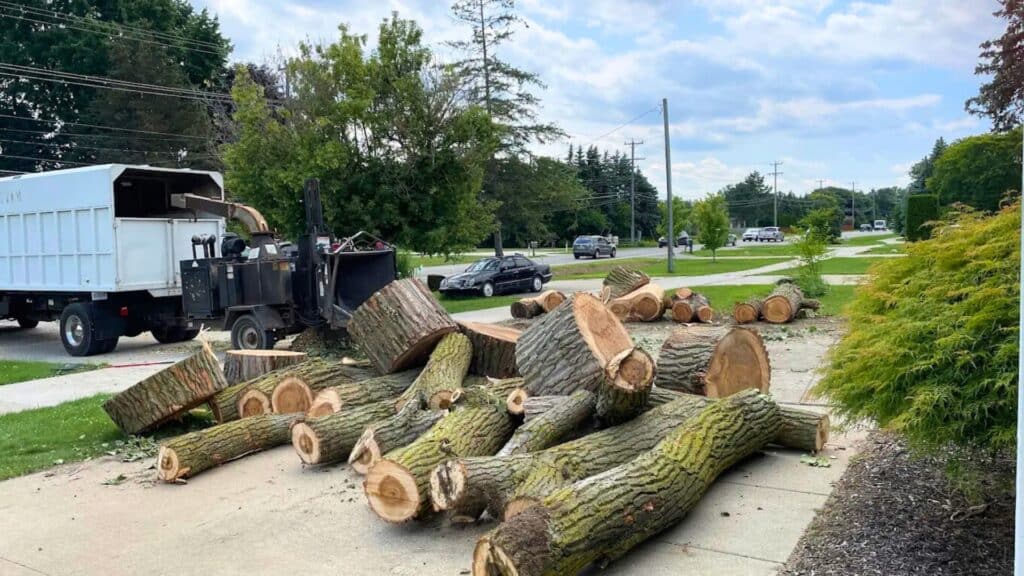
Unfortunately, even with proper care, some spruces eventually begin to suffer from health problems or become hazardous and require removal. So, to keep your family safe, be sure to contact our arborists immediately if you notice any of the following signs:
- Cavities or Hollows: Most common in older spruce trees, cavities and hollows compromise the structural integrity of a tree and are often associated with significant internal decay.
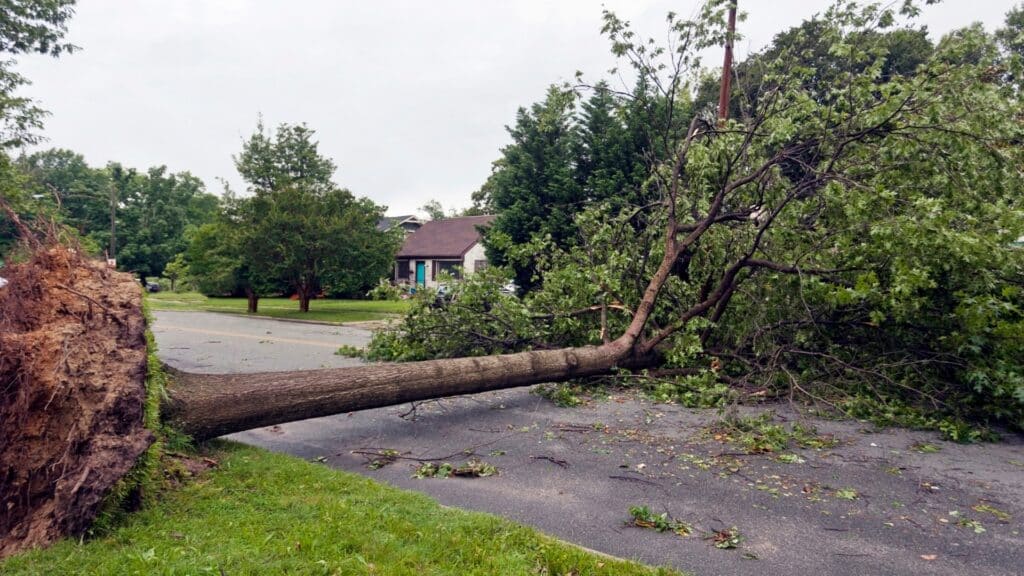
- Increased or Sudden Lean: Trees that begin leaning suddenly (or leaning more than they historically have) are often at imminent risk of collapse and should be removed immediately.
- Mushrooms or Other Fungal Fruiting Bodies: Mushrooms, conks, and brackets are caused by fungi that may compromise and weaken the trunk, primary branches, or root system of your tree.
- Dieback in the Canopy: The progressive death of one or more branches within the canopy doesn’t always necessitate removal, but it does warrant an inspection by a professional arborist.
- Cracks: Cracks are a very troubling sign that indicates the tree is potentially at high risk of failure. Even minor cracks may cause a tree to be hazardous, so they should be assessed quickly by an arborist.
- Needle Discoloration: There are a number of reasons spruce trees may suffer from needle discoloration, including some that may indicate the tree is at increased risk of failure.
It’s also important to monitor trees that have become exposed to more wind than usual. For example, if you had a small cluster of spruce trees on a portion of your property, and one of the trees falls over or is removed, the trees next to it are now exposed to more wind than they’ve adapted to withstand.
Spruce Trees in Michigan: FAQ
Still have questions about the spruces common to Michigan? We’ve rounded up a few of the most common questions we hear from our customers and answered them below.
How do I identify a spruce tree?
You can identify spruce trees by noting the square, four-sided cross-section of the needles and pendulous cones. This will help distinguish them from true firs (the species they’re most commonly confused with), which have flat needles and upright cones.
What is killing the spruce trees in Northern Michigan?
A number of pests, diseases, and environmental issues are threatening spruce trees in Northern Michigan, including Cytospora canker, Rhizosphaera needle cast, and spruce spider mites.
What spruce trees are native to Michigan?
The white and black spruce are native to large portions of Michigan, though they’re most abundant in the Upper Peninsula.
What is the average lifespan of a spruce tree?
Most spruce trees will live for approximately 100 to 300 years, though occasional outliers may live considerably longer.
What is the best spruce tree?
Different people prefer different spruce tree species, and all spruces provide a number of benefits. However, many people tend to prefer the Norway spruce, given its adaptability.
What type of spruce is a Christmas tree?
The Norway spruce is likely the most common species that’s grown and sold as a Christmas tree, though white and Colorado blue spruces are also available from some Christmas tree farms.
Should you trim the bottom of spruce trees?
No – you should not trim the bottom limbs of a spruce tree, unless there is a specific reason to do so.
Treemendous Tree Care: Your Source for Spruce Tree Care in Southeast Michigan
Spruce trees work well on most Michigan properties, given they’re planted in a sunny, well-drained location and provided with appropriate ongoing care. The arborists at Treemendous Tree Care would love to provide the care your spruce trees require, so that you can enjoy all the benefits they provide for years.
Contact us today to schedule your free estimate and learn more about the tree care services we offer. Whether you need routine pruning or an emergency removal in the middle of the night, we’re standing by and ready to help!
Sources and References
- Michigan State University Extension – “Alternatives to Blue Spruce: Top Conifers for Michigan Landscapes”
Explains why blue spruce is declining in Michigan and provides recommended alternative conifers suited to local climate and landscape use.
https://www.canr.msu.edu/resources/alternative-conifers-for-michigan-landscapes - City of Ann Arbor – “White Spruce (Picea glauca) Tree Information Card”
Provides species-specific details on white spruce identification, growth characteristics, and ecological benefits in urban landscapes.
https://www.a2gov.org/media/jxdjualq/white-spruce.pdf - Michigan State University Extension – “Pine, Spruce or Fir: Getting to Know Michigan Evergreen Trees”
Outlines key identification features and structural differences among common Michigan conifers, supporting accurate species recognition and care.
https://www.canr.msu.edu/news/pine_spruce_or_fir_getting_to_know_michigan_evergreen_trees