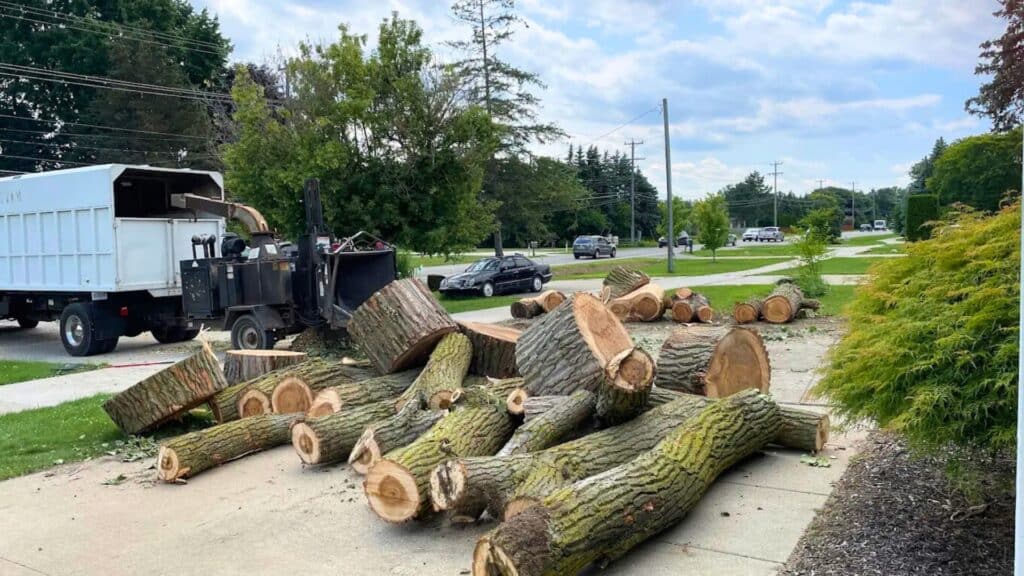
5 Signs a Tree on Your Property Needs to Come Down
A mature tree is one of the best things a Southeast Michigan property can have. Many provide shade in the
 Skip to content
From a small cherry tree to towering oaks, regular pruning is essential to keep trees healthy, safe, and attractive. The challenge is, most homeowners and property managers don’t have the tools or training to do it right. High branches require specialized gear and safety equipment, while even lower branches need proper cutting techniques. That’s why it’s smart to trust all your tree pruning to the professionals.

Treemendous Tree Care has been providing tree trimming services for residential and commercial clients in Utica since 2019. Our professional arborists have the knowledge, training, and experience required to handle all of your tree pruning needs, as well as the equipment needed to prune trees safely.
Whether you need a tree’s crown raised, thinned, or reduced—or just a routine trim—Treemendous Tree Care has you covered. We also offer targeted pruning to boost or control fruit and flower production.
Contact us today to have your trees professionally pruned!
Tree trimming is an important aspect of tree maintenance that provides a wealth of benefits. A few of the most noteworthy advantages pruning provides include:
Removing or trimming dead, dying, diseased, or unstable branches reduces the risk of property damage and helps keep anyone walking beneath the tree—people or pets—safe.
Proper tree pruning supports a tree’s health by allowing it to allocate resources more efficiently. It also helps reduce the risk of diseases, pests, or decay from spreading.
Pruning can help a tree grow more foliage by improving its overall health. Cutting a branch can also trigger nearby branches to produce new leaves.
Pruning opens up the canopy to let in more sunlight and improve airflow, making it harder for fungal and bacterial issues to develop.
Trees may block sidewalks, driveways, sightlines, or things like power lines. But professional pruning can remove the branches in these areas and restore complete access.
While each tree has its own charm, most look their best with regular pruning. It keeps the canopy healthy with strong, live branches and helps the tree maintain an attractive shape.
Pruning trees properly and at the right time of year can boost flower and fruit production. That’s why orchards follow strict pruning schedules to get the best results.
Skilled arborists can manage a tree’s size by selectively pruning key branches. For the best outcome, it’s important to begin this routine early in the tree’s life.
Pruning promotes overall tree health and reduces the chance of big branches breaking, which can leave trees vulnerable to pests and disease. It’s a simple, effective way to help your trees live longer.
Because you can have your trees pruned to accomplish a number of different goals, arborists have developed a number of different tree pruning methods and strategies to achieve the desired results. A few of the most common tree pruning services Treemendous Tree Care clients require include:
Crown thinning involves carefully removing select branches from inside a tree’s canopy to improve airflow and allow more sunlight to reach through. It’s typically done on mature trees while preserving the natural shape of the canopy.
Crown raising, or crown lifting, involves removing the lower branches of a tree to create more clearance for people, vehicles, or structures underneath. This type of pruning is often used on mature trees in urban or suburban settings.
Crown reduction trims back a tree’s overall height or size while avoiding the decay problems caused by "topping." It also keeps the canopy balanced, healthy, and suited to the tree’s natural form.
Crown cleaning focuses on removing dead, dying, or damaged branches from within the canopy. This type of pruning doesn’t usually shrink the canopy or improve airflow, but it does support the tree’s health and makes it safer overall.
Pollarding is a pruning method used to keep a tree small with yearly trims. It doesn’t work for every tree species and needs to be done properly to avoid harming the tree, but it’s a great choice for tight spaces.
Both of these techniques are used to create specific, often decorative, results. For example, a tree can be pruned to grow flat along a wall or shaped into unique forms such as spheres.
Structural pruning is typically done while trees are still young. It encourages strong growth, proper form, and structure, helping to prevent future issues and support long-term health.
Homeowners and property managers should always keep an eye out for a few signs and symptoms that indicate their trees may require pruning. Always contact a professional arborist if you see any of the following signs:

Dead or dying branches are nearly always dangerous, particularly when they’re near people or property. They can also signal underlying pest or disease issues.
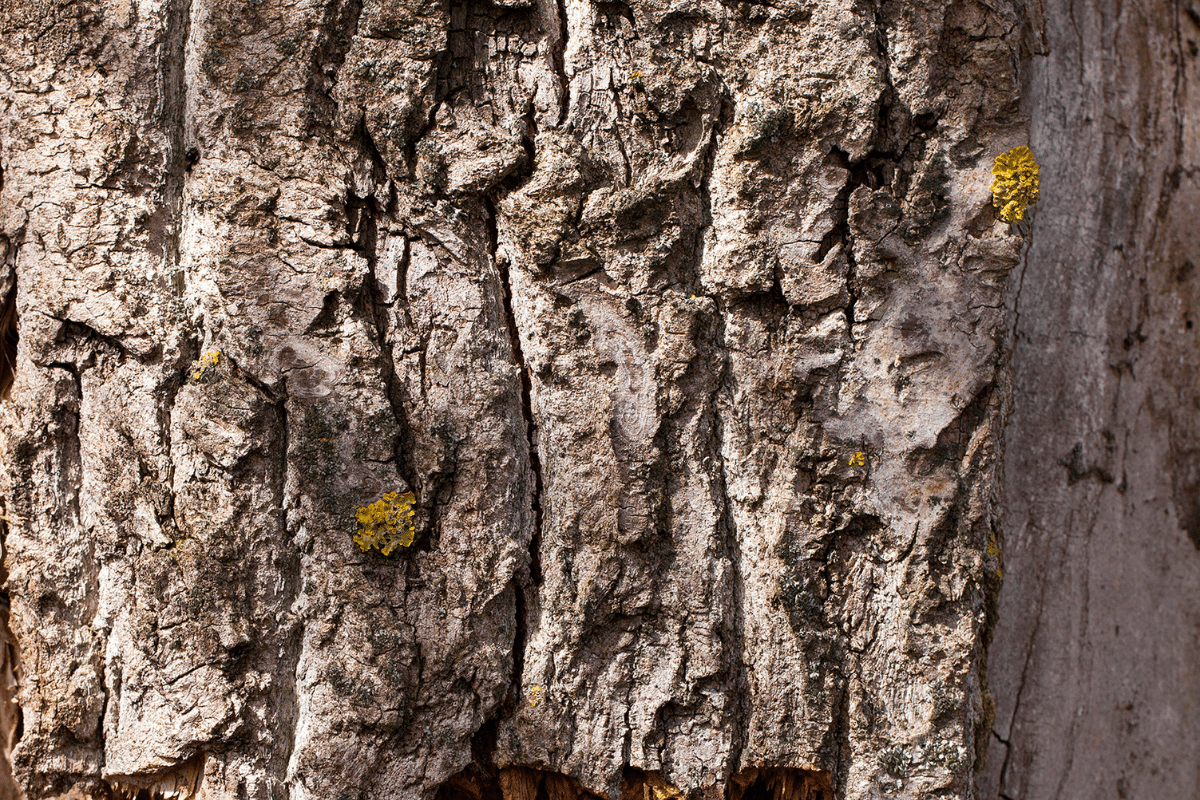
Diseased branches or those showing signs of decay should be removed promptly to stop the problem from spreading and to give your trees the best chance at a full recovery.
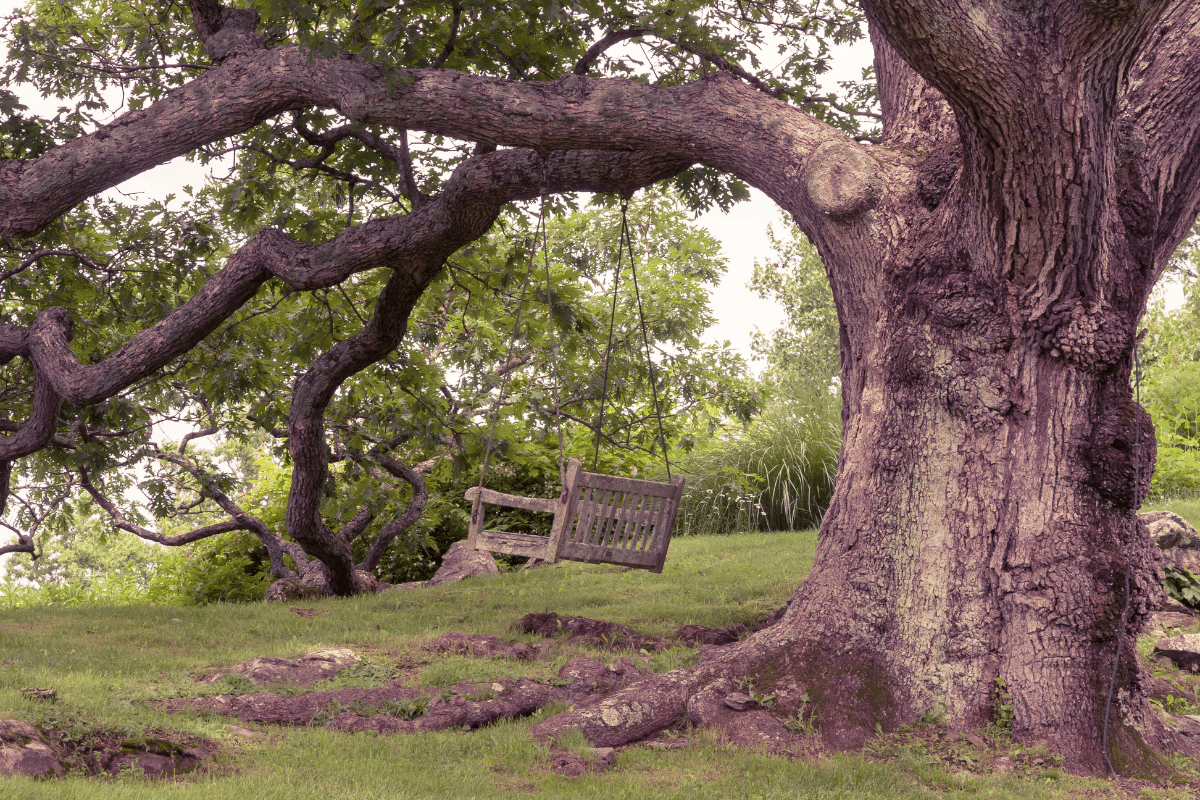
Branches that have suffered damage from severe weather or some other cause should be evaluated and potentially removed. This can help keep your trees safe and prevent injuries or property damage.

Branches that cross or rub together should typically be removed, as they can cause damage over time and may result in bark inclusions.

Trees with too many internal branches can block sunlight and restrict airflow through the canopy, creating conditions where fungal and bacterial diseases are more likely to develop.
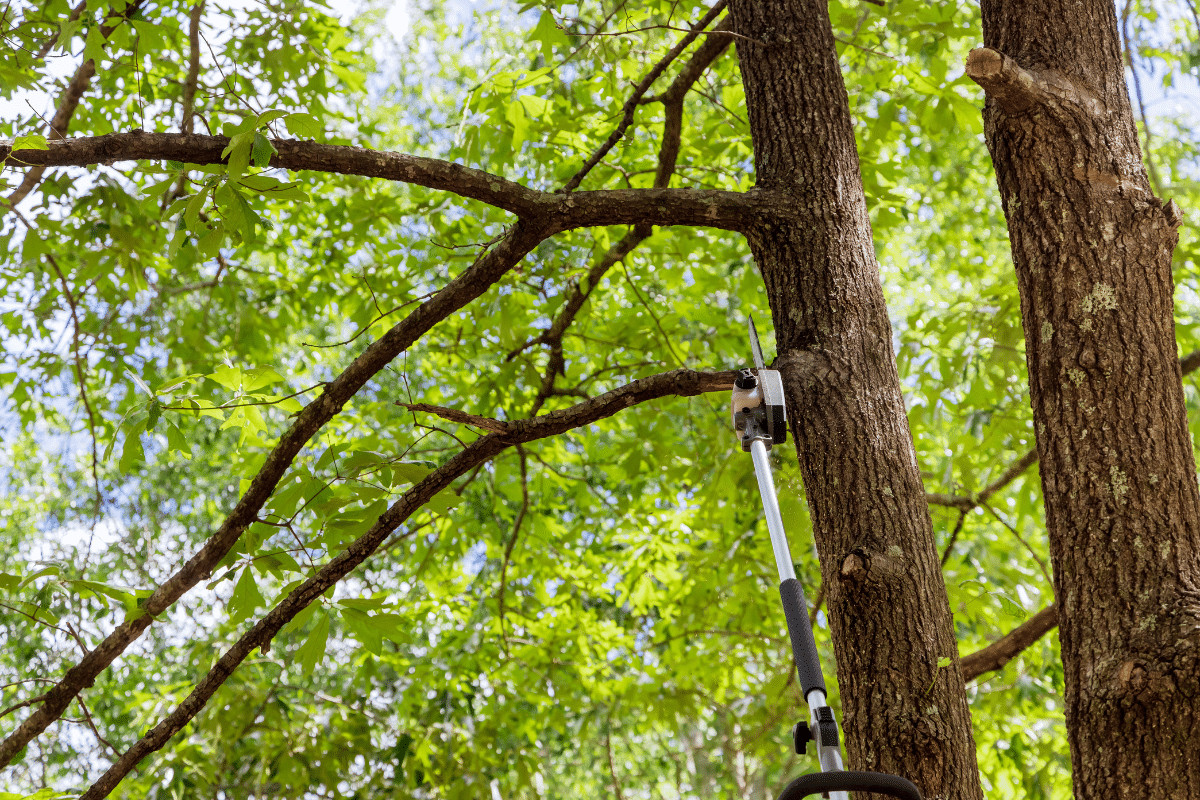
Some trees develop unevenly, which can shift their center of gravity and increase the risk of windthrow. Pruning is often the best way to restore balance and stability.

Tree branches that grow into power lines, rub against buildings, or block access paths should be removed to keep these areas clear and avoid future problems.

Some trees are planted to block sightlines, but that’s not always the intent. If a tree grows in a way that obstructs a view, pruning can often fix the problem.
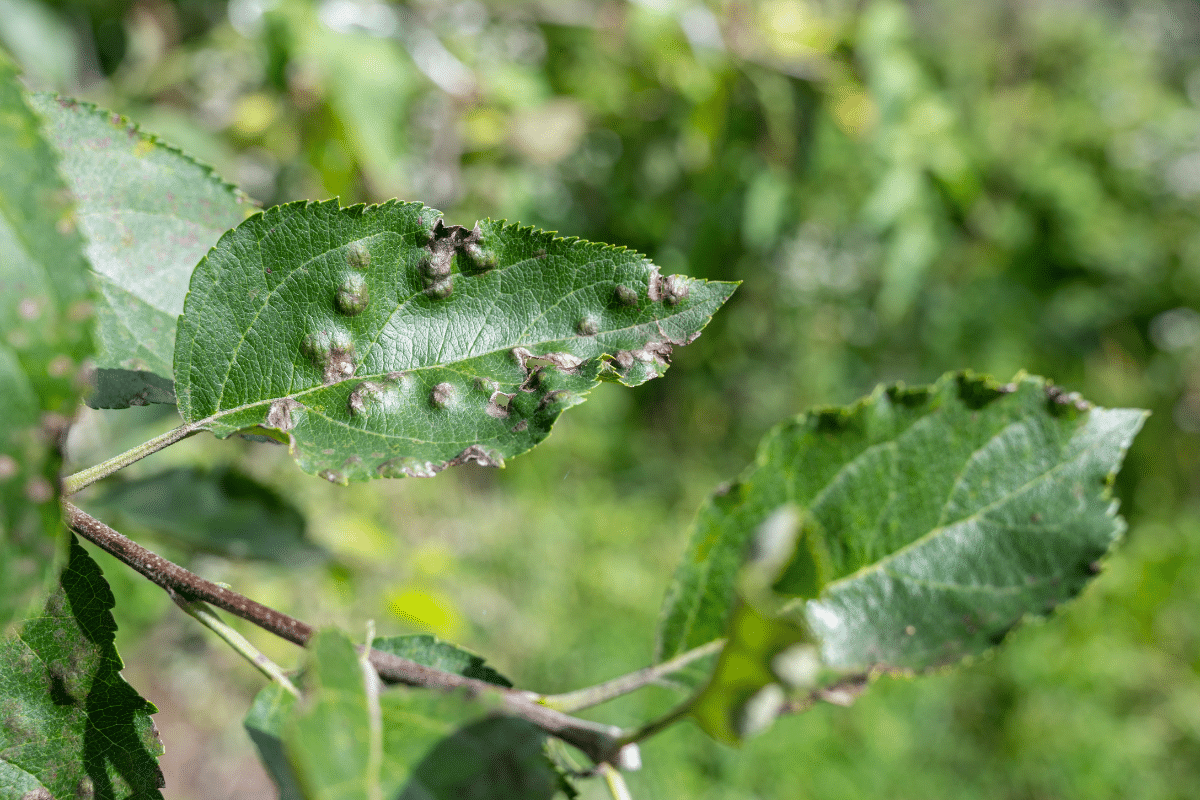
If trees aren’t producing enough fruit or flowers, pruning can make a difference. But to get the best results, it’s important to make the right cuts and time the pruning properly.
Another sign you may need professional tree pruning is if it’s been more than 3 to 5 years since the last pruning. Even trees that don’t exhibit any of the signs discussed above will generally benefit from regular trims, so contact Treemendous Tree Care and let us schedule a pruning visit today!

Tree trimming and pruning are key parts of proper tree care—but they have to be done correctly. When handled the right way, they improve a tree’s health and safety. Done poorly, they can do lasting harm. That’s why it’s smart to leave the work to the experts at Treemendous Tree Care. Our certified arborists will evaluate your trees, create a tailored pruning plan, and make sure the job’s done right. We’ve been serving Utica homeowners since 2019, and we’d be glad to help you too!
Contact us today to schedule your free estimate!
No matter what type of tree pruning services you require, our time-tested process will unfold in the same basic manner.
You reach out to schedule your free estimate.
One of our arborists will come to your home or business, evaluate the trees that need pruning, and suggest the best plan of action.
Once you approve the plan, we’ll set a date—often finishing the work that same day.
Our team will then get started, delivering the expert tree pruning services you need.
After trimming your trees and cleaning up the debris, we’ll walk you through the results and answer any questions you may have.
After making sure you’re completely satisfied with the results, we’ll tidy up every last bit of debris and leave your property looking spotless before we head out.

Choosing a dependable tree-care company is essential when it comes to trimming your trees. It ensures the job is done right, keeps your trees healthy, and makes the whole process hassle-free.
To be the top choice for Utica residents, we stick to a few key best practices, including:
We make sure our customers know exactly what pruning services they’ll receive, along with a clear and upfront breakdown of all costs.
Unlike some less professional tree care companies that lack proper licensing and insurance, we are fully licensed by the state of Michigan and carry comprehensive insurance coverage.
While some tree care companies rely on outdated or low-quality tools, we invest in top-of-the-line, industry-leading equipment to ensure the best results every time.
From the time we show up to the moment the job is finished, we keep you updated and are always ready to answer your questions or handle any concerns.
Simply put, we’re not done until you’re happy—we don’t consider the job complete until you’re fully satisfied with the results.
The right trimming can mean the difference between strong, beautiful trees and ongoing issues. Don’t wait—let the experienced arborists at Treemendous Tree Care provide the expert pruning your trees need. Many Utica residents already rely on us, and now it’s your turn!
Treemendous Tree Care is your local arborist, proudly serving Southeast Michigan with top-quality tree trimming, pruning, and removal. Whether it’s an emergency or just overdue maintenance, you can rely on Treemendous Tree Care!
Have a few lingering questions about tree pruning in Utica? Wondering what kinds of tree pruning services we provide? We’ve answered some of the most common questions our customers have below!
Trees should be pruned with purpose—whether it’s to remove dead branches or to raise the canopy. They should also be pruned within the first 2 years after planting to establish a strong structure, and then every 3 to 5 years to maintain their health and shape.
People often use the words “trimming” and “pruning” as if they mean the same thing—and in everyday conversation, they pretty much do. That’s why we use both terms when talking with clients about tree care.
Professionals, though, tend to favor the word “pruning.” It suggests a more careful, strategic approach, like shaping the canopy or improving airflow. “Trimming,” on the other hand, is more often used for shrubs and hedges, where the main goal is appearance.
Tree pruning costs vary significantly, based on a variety of factors. Some of the most noteworthy factors that will influence the costs of a specific pruning job include the size and species of the tree to be pruned, the health status and condition of the tree, the relative ease of access, and the time of year.
Having a small tree pruned will often cost less than $100, while an elaborate pruning job for a large tree may cost $2,000 or more.
The 3 C’s of pruning stand for removing crossing branches, competing branches, and crowded branches. This helps more sunlight and air reach the canopy, improving the tree’s overall health.
Pruning some trees at the wrong time of year may expose the tree to pests or diseases. In some cases, this can even be fatal for the trees.
For example, oaks should always be pruned during the dormant season to help prevent oak wilt – a fungal disease spread by the feeding habits of sap beetles. If oaks are pruned during the summer, the wounds will likely attract the beetles. But if pruning is carried out in the winter, beetles are unlikely to visit the tree.
The only way to know whether a tree can be saved by pruning or if it needs complete removal is to contact a professional arborist, who can assess the tree. In some cases (especially when pruning is scheduled promptly after a problem is spotted), pruning may be able to prevent a tree from being removed.
The ideal time to trim most trees is during winter or very early spring. This timing helps reduce the risk of pests and disease, and many tree-care companies have more availability in the off-season. In fact, you can often save money since rates are usually lower during this time of year.
Failing to prune a tree properly or on a regular schedule can lead to poor structure, slow growth, or even create safety risks if dead, dying, or damaged branches are present. For this reason, it’s always a good idea to have trees pruned every 3 to 5 years.
Regular pruning can absolutely help support good tree health. However, it is vital that the pruning is carried out in a correct manner, by professional arborists using only the most current techniques and the proper equipment. But yes — regular pruning can help you enjoy healthy trees for years to come.
A mature tree is one of the best things a Southeast Michigan property can have. Many provide shade in the
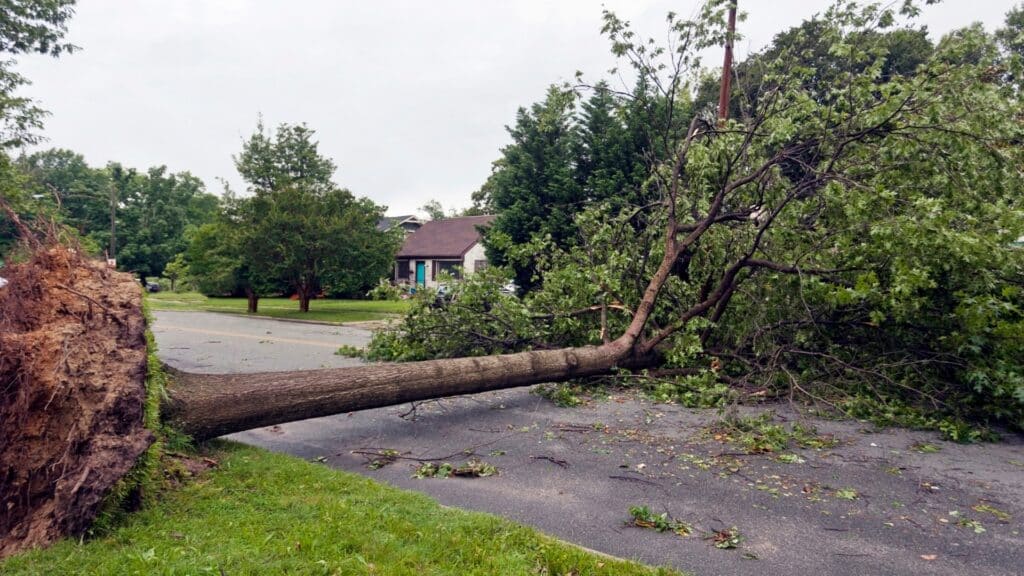
Southeast Michigan weather can be hard on trees all year long. Powerful spring windstorms, summer thunderstorms, fall winds, and heavy

With their evergreen foliage, persistent upright cones, and soft needles, firs are welcome additions to many Michigan properties. Capable of
Posted on Google
 Peggie Hawes7 days ago
Trustindex verifies that the original source of the review is Google.
The service was off the charts they did a beautiful job. I would recommend them to anybody and everybody. Perfection!Posted on Google jeff salloum17 days agoGreat Company! Very nice people and an excellent price!!Posted on Google
 Christian O'Connor23 days agoVery pleased with their work. Adequately sized crew, respectful of tight neighborhood, safe work, and cleaned up excellently. Even went deep into neighbor’s yard to clean up anything that may have made its way over there.Posted on Google
 Toni29 days agoAmazing job!Posted on Google
 Beth McIntyre40 days agoTremendous did an excellent job of removing our tree and grinding the stump. Excellent communication.Posted on Google
 Denise Rosati43 days agoGreat company did exactly what they said they would. Fast workers remove large branches laying on my roof & left my yard & roof absolutely clean. I would recommend this company to anyone they did a great job! I’m very pleased, I wish everybody worked as good as they did 👏 👍🏼😁 Thanks guysPosted on Google
 Doug Capps45 days agoThe crew came in, dropped a big maple that was not doing well. Chipped it and cleaned up. I was impressed at the hard work of the team. All done safely. Pricing was fair. No complaints at all.Posted on Google
 James Kupski46 days agoExcellent service Great job went beyond expectations, cleanup left premises immaculately extremely efficient Job completed in a fast, timely matter Great, friendly, informative team Membershard workers Extremely happy thank you for the servicePosted on Google
 Kent49 days agoEveryone from Ryan to the crew that did the job were very professional and they did an excellent job. I would definitely recommend treemendous for your tree removal or trimming.Posted on Google
 Tom Griffin53 days agoFantastic work today! Fast, safe and done 100% professionally. Thank you once again for the fantastic work.
Feel free to leave your contact information on our online form. A consultation is always free, and it’s the first step towards finding a solution for your trees!
