Skip to content

Michigan winters can be rough on trees, even the ones that are native to our area.
Some emerge in spring looking just fine. Others show up with browned needles, cracked bark, or branches that didn’t survive the last ice storm. Meanwhile, young trees are especially vulnerable to hungry critters and the cold.
Fortunately, a little preparation in the fall can prevent many common winter injuries. Here’s what Michigan winters can do to your trees and eight practical ways you can help protect them.
Challenges Trees Face During Michigan’s Long & Cold Winters
Cold temperatures are only part of what Michigan trees face each winter. Frozen soil, drying winds, bright sunshine, heavy ice, road salt, and hungry wildlife can all take a toll.
And when several of those challenges arrive together, even a healthy tree can struggle.
Low Temperatures & Sudden Temperature Swings
Most trees suited to Southeast Michigan can handle a typical winter’s cold once they’ve settled into dormancy. But sudden temperature swings can catch even hardy trees off guard.
A stretch of unusually warm weather can cause trees to lose some of their cold hardiness. If temperatures plunge again, buds and other living tissues may suffer damage that doesn’t become obvious until spring.
Trees growing near the limits of their hardiness range are especially vulnerable.
Frozen Soil & Drying Winds
Evergreens may look like they’re resting all winter, but their needles continue losing moisture, especially on sunny, windy days. And when the ground freezes, their roots can’t replace that lost water.
The result is winter burn, which causes needles or foliage to look brown and scorched, often on the south and west sides of the tree where sun and wind exposure are greatest.
Arborvitae (Thuja spp.), junipers (Juniperus spp.), and yews (Taxus spp.) are particularly vulnerable, especially in open, windy locations where there’s little shelter from the elements.
Sunscald & Frost Cracks
Winter sunshine might feel welcome on a cold Michigan afternoon, but it can be surprisingly hard on tree bark.
When sunlight warms the south or southwest side of a trunk, the living tissue beneath the bark can become more vulnerable to injury. If temperatures plunge after sunset, that tissue may die, leaving sunken, cracked, or peeling bark. This is called sunscald.
Frost cracks are different. Rapid temperature drops can cause long, vertical splits in the trunk, sometimes accompanied by a loud cracking sound.
Both injuries are more common in young trees and thin-barked species. And while a tree may recover, damaged bark can leave it more vulnerable to decay and other problems.
Ice Storms & Heavy Snow
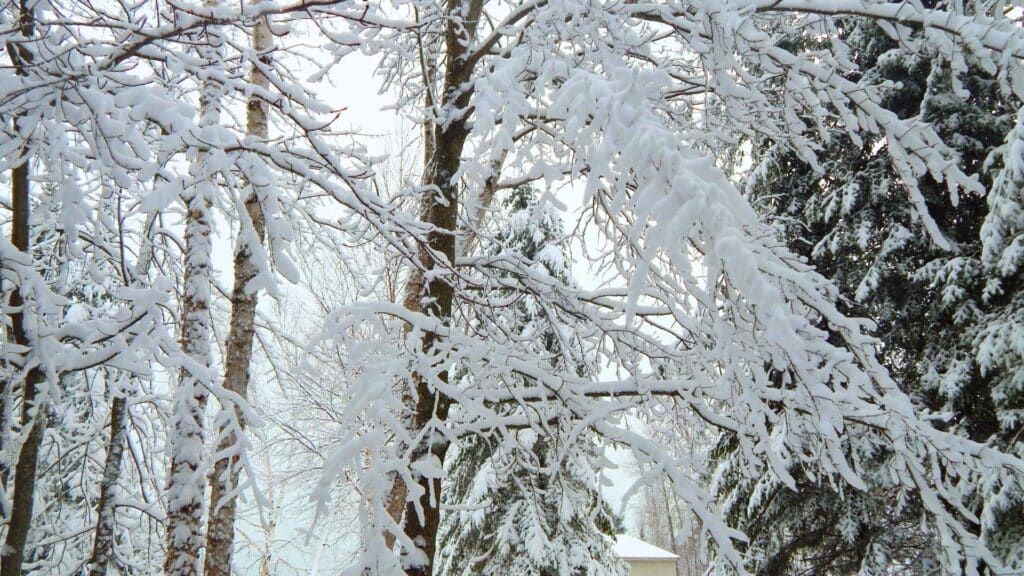
Ice storms and heavy, wet snow can place tremendous stress on tree canopies, especially those with weak branch attachments or existing structural defects.
Evergreens and upright, multi-stemmed trees are particularly vulnerable to the added weight. If winter weather leaves broken branches in your yard, our guide to handling storm damage before the crew arrives explains what to do next.
Ice on the Branches? Leave It Alone.
Knocking ice off branches can damage branches that are already under stress. So, let the ice melt on its own. For heavy snow, brush gently upward with a broom (never downward), and leave broken limbs you can’t reach from the ground to a professional.
Deicing Salt
Road salt helps keep Michigan’s streets and sidewalks safe in winter, but it’s not nearly as kind to your trees.
Salt spray from passing traffic can damage buds, bark, and evergreen needles. Meanwhile, salty meltwater seeps into the soil, making it harder for roots to absorb the water they need.
The damage often doesn’t become obvious until spring. Watch for browned needles on the side facing the road, delayed leaf-out, or dying branches. Trees along busy streets and near heavily salted driveways are especially vulnerable.

Hungry Wildlife
When snow covers their usual food sources, deer, rabbits, and voles may turn to the trees in your yard for a winter meal.
Deer browse buds and tender branches, while bucks can damage young trunks by rubbing their antlers against the bark. Rabbits leave sharp, angled cuts on twigs and chew bark, sometimes surprisingly high on the trunk when deep snow gives them a boost.
And don’t overlook voles. These small rodents tunnel beneath snow and mulch, quietly chewing bark near the base of trees where you may not notice the damage until spring.
If rabbits or voles strip bark all the way around a trunk, the damage is called girdling. It can cut off the flow of nutrients and eventually kill the tree.
Quick Reference: Threats to Trees During Michigan’s Winters
| Winter Challenge | What You May Notice | Helpful Preventive Steps |
|---|---|---|
| Winter burn | Brown evergreen needles, especially on sunny or windy sides | Water before freeze-up, mulch, shelter exposed evergreens |
| Sunscald | Cracked, peeling, or sunken bark on young trees | Install light-colored trunk wraps in fall |
| Frost cracks | Long vertical trunk splits | Protect vulnerable young trees and maintain overall tree health |
| Ice and heavy snow | Broken or hanging branches | Prune weak branches before winter; don’t knock ice off limbs |
| Road salt | Browning foliage, delayed spring growth, dieback | Use barriers, avoid piling salty snow near roots |
| Deer, rabbits, and voles | Chewed bark, missing buds, girdling | Fencing, hardware-cloth guards, trunk protection |
| Dry fall conditions | Stress, winter burn risk, poor spring performance | Deeply water before the ground freezes |
8 Ways to Prepare Your Trees for Winter in Michigan
You don’t need to tackle every winter threat to give your trees a better chance of coming through the season healthy.
Most winter preparation happens in October and November, before the ground freezes. Some steps are simple enough to handle yourself, while others call for a professional’s expertise.
Here are eight ways to help your trees weather a Michigan winter.
- Mulch the Root Zone
Think of mulch as a protective blanket for your tree’s roots. It helps retain soil moisture and keeps soil temperatures more consistent as Michigan’s weather swings between freezing and thawing.
Spread a 2- to 4-inch layer of organic mulch, such as wood chips or shredded bark, around the root zone, extending it as far from the trunk as practical.
But keep the mulch a few inches away from the trunk. Those familiar “mulch volcanoes” piled against tree bark can trap moisture, encourage decay, and provide cozy winter hiding places for bark-chewing voles.
- Water Deeply Before the Ground Freezes
Don’t let your trees head into winter thirsty, especially evergreens and anything planted in the last few years.
If autumn has been dry, give your trees a slow, deep watering before the ground freezes. Aim for roughly an inch of water per week from rain and supplemental watering combined, adjusting for soil conditions and skipping watering when the ground is already saturated.
Trees that struggled through a dry summer deserve extra attention, too. Moist soil also holds heat better than dry soil, offering roots a little more protection when temperatures drop.
- Fence Out Deer
Deer may be beautiful to watch, but they’re not nearly as welcome when they’re munching on your trees.
For young or particularly valuable trees, physical barriers offer the most reliable protection. A sturdy wire cage or fence at least 4 feet tall can help prevent bucks from rubbing their antlers against trunks. But protecting branches from hungry deer may require taller fencing.
Deer repellents can also help, although they need regular reapplication and may become less effective as natural food sources grow scarce later in winter.
- Guard Young Trunks from Rabbits, Voles & Sunscald
Young trees need a little extra protection from hungry wildlife and winter sunshine.
To keep rabbits and voles from chewing the bark, surround the trunk with a cylinder of hardware cloth, leaving room for the trunk to grow. Bury the bottom edge a few inches into the soil to discourage voles, and make sure the guard extends above the expected snow line. Remember, rabbits can reach surprisingly high when they’re standing on snow!
For young or thin-barked trees, a white or light-colored tree wrap can help prevent sunscald by reflecting winter sunlight. Apply it in late fall and remove it in spring to prevent moisture from becoming trapped against the bark.
And don’t forget to keep tall grass and weeds trimmed around the trunk. Removing that vegetation makes the area less inviting to voles looking for a winter meal.
- Prune Strategically
Dead, cracked, or weakly attached branches can become dangerous when heavy snow and ice arrive. Removing them before winter may reduce the risk of damage to your home, vehicles, or other nearby structures.
But timing matters when pruning healthy branches. Most routine pruning is best done while trees are dormant, when their structure is easier to see. Winter is also an excellent time to prune oaks in Michigan because the risk of spreading oak wilt is lower.
If you’re concerned about large branches, limbs hanging over your home, or anything near power lines, leave the work to qualified professionals. There’s no reason to risk your safety trying to tackle hazardous pruning yourself.
Our team can help you determine whether professional tree trimming is needed before winter.
- Skip the Fertilizer Unless There’s a Clear Need
It’s tempting to give your trees one last nutritional boost before winter. But more fertilizer doesn’t necessarily mean healthier trees.
Most established landscape trees don’t need routine fall fertilization. And applying nutrients at the wrong time can encourage tender new growth that may be vulnerable to freezing temperatures.
If your tree has yellowing leaves, sparse growth, or other signs of stress, don’t assume fertilizer is the answer. A soil test can help identify nutrient deficiencies, while a professional assessment can determine whether something else is affecting your tree’s health.
The goal is to give your tree what it needs, not simply more of everything.
- Protect Trees from Deicing Salt
You can’t control how much salt Michigan road crews spread each winter. But you can make a difference around your own driveway, sidewalks, and trees.
A few simple habits can help limit salt damage:
- Shovel First, Salt Second: Clear snow promptly so you need less deicer to keep walkways safe.
- Watch Where You Pile Snow: Avoid piling salt-laden snow near tree trunks or planting beds, where melting snow can carry salt into the root zone.
- Shield Roadside Evergreens: A burlap screen or landscape fabric secured to snow fencing can help block salt spray from passing traffic.
- Choose Salt-Tolerant Trees: When planting near roads or driveways, consider species such as hackberry (Celtis spp.), honeylocust (Gleditsia triacanthos), or Kentucky coffeetree (Gymnocladus dioicus), which are better suited to areas exposed to road salt.
- Have Your Trees Assessed by a Professional Arborist
Some winter risks are easy to spot, like a broken branch or a young tree with an exposed trunk. Others are harder to recognize from the ground.
A professional tree assessment can help identify weak branch attachments, structural problems, and signs of declining health before snow and ice add extra stress.
If you’re unsure whether a tree needs attention before winter, our team can help you understand what needs to be addressed now and what can safely wait.

Which Trees Are Most Vulnerable During Michigan’s Winters
Some trees handle Michigan winters better than others. And even species that are well suited to our climate can struggle when they’re young, newly planted, or growing in an exposed location.
Here are four groups of trees that may need a little extra attention before winter arrives.
Evergreens
Because they retain their foliage year-round, evergreens continue losing moisture throughout winter, making them especially vulnerable to winter burn. They’re also susceptible to road salt damage, and some are favorite winter foods for deer.
Arborvitae, junipers, yews, and spruces (Picea spp.) can struggle in Michigan winters, especially in windy, exposed locations. Newly planted evergreens are particularly vulnerable while their root systems become established.
However, winter burn doesn’t always mean a tree is dying. Some evergreens recover as healthy new growth emerges in spring, although needles that have turned completely brown won’t become green again.
Young & Newly Planted Trees
Young trees haven’t had years to develop the extensive root systems and thick bark that help mature trees withstand Michigan winters. And newly planted trees, regardless of their size, need time to establish roots in their new surroundings.
That makes them especially vulnerable to drying winds, frozen soil, sunscald, and hungry wildlife. Trees planted in late summer or fall may need extra attention because they’ve had less time to establish before winter arrives.
A little protection goes a long way. Keep the root zone mulched, provide supplemental water during dry fall weather, and protect vulnerable trunks from rabbits, voles, and winter sunshine.
Thin-Barked Species
Trees with smooth, thin bark are especially vulnerable to sunscald, and some are also prone to frost cracks when winter temperatures swing dramatically.
Common examples in Southeast Michigan landscapes include maples (Acer spp.), lindens (Tilia spp.), honeylocusts, and fruit trees such as crabapples (Malus spp.).
Young trees in these groups may benefit from light-colored trunk wraps during winter. And keep an eye on crabapples, which can also attract bark-chewing rabbits and voles.
Trees at the Edge of Their Hardiness Zone
Every tree has its limits when it comes to cold. Much of Southeast Michigan falls within USDA hardiness zones 6a and 6b, where average annual extreme minimum temperatures range from −10°F to 0°F. A tree rated only for zone 7 may struggle when Michigan delivers a particularly cold winter.
The USDA’s updated 2023 Plant Hardiness Zone Map shifted some parts of Michigan into warmer zones. But those ratings reflect averages, not the coldest temperatures that can occur. An unusually harsh winter can still damage trees growing near the limits of their hardiness.
When planting, choose species rated for your local zone or colder. And if you already have a borderline-hardy tree, consistent watering, mulch, and protection from harsh winds can help it withstand additional winter stress.
Preparing Trees for a Michigan Winter: FAQ
Still have questions about preparing your trees for winter? Here are answers to some common questions from Michigan homeowners.
When should I start preparing my trees for winter in Michigan?
October and November are generally the best months to prepare your trees for winter, before the ground freezes. Focus on watering during dry weather, refreshing mulch, and installing trunk guards or wraps where needed.
Most routine pruning can wait until trees are dormant, but damaged or hazardous branches may need attention sooner.
How much should I water my trees before winter?
Aim for roughly an inch of water per week from rainfall and supplemental watering combined, especially if autumn has been dry.
Water slowly and deeply so moisture reaches the root zone, and give extra attention to evergreens and newly planted trees. But if the soil is already saturated, skip the watering. Continue as needed until the ground freezes.
Should I wrap my tree trunks for winter?
Sometimes. Young trees and thin-barked species, such as maples and crabapples, may benefit from winter wrapping. A white or light-colored tree wrap reflects sunlight and helps prevent sunscald.
Apply the wrap in late fall and remove it in spring to avoid trapping moisture against the bark. For protection against rabbits and voles, use a sturdy hardware cloth guard instead.
Is winter a good time to prune trees in Michigan?
Yes, for most trees. Once they’re dormant, their branch structure is easier to see, making winter an excellent time for routine pruning.
Winter is especially good for pruning oaks because the risk of spreading oak wilt is lower. The Michigan Department of Natural Resources advises avoiding oak pruning from April 15 through July 15.
Dead or hazardous branches may need attention regardless of the season.
Should I knock snow and ice off my trees?
Snow, gently. Ice, no. You can carefully brush heavy snow off branches with an upward motion, never downward, to avoid breaking them.
But leave ice alone. Knocking it off can cause more damage than the ice itself. And if branches are broken, hanging overhead, or near power lines, keep your distance and call a professional.
Why do my evergreens turn brown over the winter?
Often, it’s winter burn. When the ground freezes, roots can’t replace moisture lost through needles and foliage on sunny, windy days. Road salt can also cause browning, especially on the side of a tree facing the street.
The good news? Evergreens with healthy buds may produce new growth in spring, although needles that have turned completely brown won’t become green again.
Do I need an arborist to prepare my trees for winter?
Not for every task. Most homeowners can handle watering, mulching, and protecting young trunks from winter damage.
But if you’re concerned about large or damaged branches, potential storm hazards, or a tree that’s already struggling, a professional assessment can help you understand what needs attention before winter arrives.

Give Your Trees a Head Start Before Winter Arrives
A little attention now can spare your trees a lot of trouble when Michigan’s winter weather arrives. Watering, mulching, and protecting young trunks are all good places to start.
But if you’re concerned about an overhanging limb, a damaged tree, or an evergreen that struggled last winter, you don’t have to figure everything out yourself.
Treemendous Tree Care helps Southeast Michigan homeowners assess tree health, identify potential hazards, and plan appropriate pruning and maintenance. And when winter storms bring down branches or damage trees, our 24/7 emergency tree service is available to help.
Contact Treemendous Tree Care to schedule a professional tree assessment.
Sources & References
- Michigan State University Extension — “Tips for preparing landscape trees and shrubs for winter.” Provides Michigan-specific recommendations for preparing trees before freezing weather, including fall watering, winter protection for evergreens, and the use of protective wind barriers.
https://www.canr.msu.edu/news/tips_for_preparing_landscape_trees_and_shrubs_for_winter - Michigan State University Extension — “Winter burn on trees more likely following harsh Michigan winter.” Explains how evergreens lose moisture during winter, why frozen soil prevents roots from replacing that water, and how sun exposure, wind, and insufficient snow cover contribute to needle browning.
https://www.canr.msu.edu/news/winter_burn_on_trees_more_likely_following_harsh_michigan_winter - Michigan State University Extension — “Frost cracks and winter damage to trees.” Describes how winter sunlight and rapid temperature changes damage tree bark, identifies susceptible thin-barked species, and supports using light-colored trunk wraps in fall and removing them in spring.
https://www.canr.msu.edu/news/frost_cracks_and_winter_damage_to_trees - University of Illinois Extension — “Exploding trees? A closer look at frost cracking” (Emily Swihart, January 30, 2026). Explains how uneven contraction of wood during sudden temperature drops can split a trunk with a loud cracking sound. Also describes why repeated frost cracks may create long-term structural problems.
https://extension.illinois.edu/blogs/good-growing/2026-01-30-exploding-trees-closer-look-frost-cracking - Michigan State University Extension — “Salt damage to landscape trees and shrubs.” Identifies winter salt exposure as a cause of damaged buds, browned evergreen foliage, delayed growth, and branch dieback. Supports the article’s discussion of salt spray from roads and salt-contaminated soil.
https://www.canr.msu.edu/news/salt_damage_to_landscape_trees_and_shrubs - Michigan State University Extension — “Selection of Salt Tolerant Trees” (Bert Cregg, May 19, 2006). Explains how road salt affects trees through spray, soil contamination, and sodium and chloride uptake. Supports protective barriers and identifies species with relatively good salt tolerance, including hackberry, honeylocust, and Kentucky coffeetree.
https://www.canr.msu.edu/news/selection_of_salt_tolerant_trees - Michigan State University Extension — “Your plants and winter animal damage.” Describes how deer, rabbits, and voles damage landscape plants during winter. Supports protective fencing, trunk guards, and keeping mulch and vegetation away from trunks to reduce opportunities for bark-chewing animals.
https://www.canr.msu.edu/news/your_plants_and_winter_animal_damage - Michigan State University Extension — “Animal damage: meadow voles and rabbits, and abiotic injury.” Helps distinguish rabbit and vole damage through feeding patterns and bark injury. Supports the discussion of sharply cut twigs, girdling, and the vulnerability of ornamental trees such as crabapples.
https://www.canr.msu.edu/resources/animal_damage_meadow_voles_and_rabbits_and_abiotic_injury - Michigan Department of Natural Resources — “Don’t spread oak wilt – wait to prune!” (April 13, 2026). Provides Michigan’s recommendation to avoid pruning oaks from April 15 through July 15, when the risk of insect-borne oak wilt infection is elevated. Identifies winter dormancy as the preferred pruning period.
https://content.govdelivery.com/accounts/MIDNR/bulletins/412b58a - Michigan Department of Natural Resources — “Showcasing the DNR: Time to get trees ready for winter weather.” Offers practical statewide advice on removing potentially hazardous branches, watering trees before winter, preventing deer damage, and protecting vulnerable trunks.
https://content.govdelivery.com/accounts/MIDNR/bulletins/2fbb19f - USDA Agricultural Research Service — “2023 USDA Plant Hardiness Zone Map.” Provides the official plant hardiness classifications and ZIP code lookup. Supports the discussion of Southeast Michigan’s zones 6a and 6b, their average annual extreme minimum temperatures, and the risks of planting trees near the limits of their cold hardiness.
https://planthardiness.ars.usda.gov - University of Maine Cooperative Extension — “Preparing Trees for Winter.” Explains how fluctuating fall and winter temperatures affect cold hardiness and why fertilization that encourages late-season growth can increase vulnerability to freezing injury.
https://extension.umaine.edu/fruit/?p=842 - Iowa State University Extension — “How to Prevent Ice and Snow Damage on Trees and Shrubs.” Supports leaving ice-covered branches undisturbed and carefully removing heavy snow with an upward brushing motion to reduce the risk of breakage.
https://yardandgarden.extension.iastate.edu/how-to/how-prevent-ice-and-snow-damage-trees-and-shrubs - Iowa State University Extension — “How should I prepare woody trees and shrubs for winter?” Provides guidance on preventing deer antler damage with fencing, protecting trunks against sunscald and animal feeding, and avoiding pruning practices that encourage vulnerable late-season growth.
https://yardandgarden.extension.iastate.edu/faq/how-should-i-prepare-woody-trees-and-shrubs-winter - University of Nebraska–Lincoln Extension — “Avoid Winter Wounds on Trees.” Supports using hardware cloth guards that extend below the soil surface to discourage voles and reducing protective vegetation around trunks that may shelter rodents during winter.
https://extension.unl.edu/statewide/knox/avoid-winter-wounds-trees - Ask Extension — “Arborvitae #879558” (Michigan Extension response). Provides Michigan-specific guidance on assessing whether established landscape trees need fertilizer, supporting the recommendation to investigate potential nutrient deficiencies rather than fertilizing routinely before winter.
https://ask.extension.org/kb/faq.php?id=879558